

The Space Industry: one of the fastest‑growing markets of our time
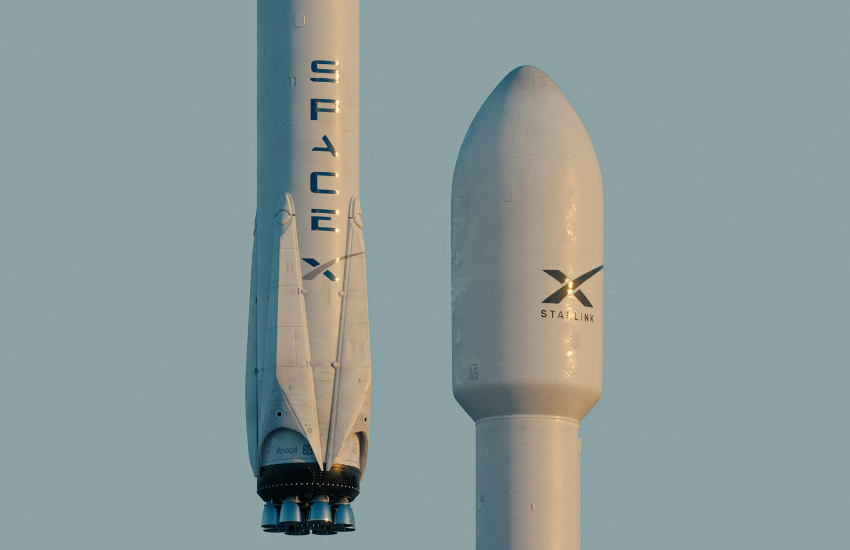
The global space economy has quietly crossed $626 billion in 2026, expanding at 8–12% annually, outpacing semiconductors, cloud computing, and biotech. Investor appetite has surged as well: venture funding rebounded to $12.4 billion in 2025, a 53% year‑over‑year jump that marked the strongest recovery since the 2021 downturn.
Momentum accelerated further this year. Q1 2026 alone attracted $36.1 billion in private investment, the largest quarterly inflow ever recorded in the space sector. This combination of structural growth, defence‑driven demand, and renewed capital availability is transforming space from a niche frontier into one of the most compelling high‑growth themes for global investors.
The space industry is not one market: it’s five. And each has its own winners.
The space economy is no longer a monolithic “rocket industry.” It is a layered ecosystem with different business models, risk profiles, and revenue dynamics. Understanding these layers is essential for investors, because the winners in each segment look very different.
Below is a breakdown of the five core subsectors, why they matter, and which companies are best positioned today.
1. Launch providers
Launch is the most visible part of the space industry, but also the most capital‑intensive and operationally unforgiving. It is essential infrastructure, yet historically the least profitable segment.
Likely winners:
- SpaceX: unmatched cadence, lowest cost per kg, dominant share of global launches
- Rocket Lab: the only credible #2, with proven launch capability and Neutron coming
- Blue Origin (privately held): New Glenn operational, strong backing, but still scaling
Investor takeaway: launch is a winner‑takes‑most market. Only a few players will survive, but those who do become indispensable infrastructure.
2. Satellite manufacturing
Margins improve significantly here. The winners are companies that can mass‑produce satellites like consumer electronics, not bespoke aerospace hardware.
Likely winners:
- SpaceX: Starlink production at industrial scale
- Rocket Lab: Photon platform, vertically integrated components
- Airbus / Thales Alenia: established global manufacturers with defence contracts
- York Space: fast‑growing U.S. mass‑manufacturing specialist
Investor takeaway: this segment benefits from repeat orders, long‑term contracts, and scalable production, making it more attractive than launch.
3. Constellation operators
This is where the real recurring revenue lives: connectivity, mobility, IoT, aviation, maritime, and government communications.
Likely winners:
- Starlink: global broadband leader, millions of subscribers
- Amazon Kuiper: massive capital backing, entering commercial phase
- Iridium: profitable niche operator with strong government ties
- OneWeb/Eutelsat: consolidated European operator
Investor takeaway: constellations are the telecom layer of space, subscription revenue, high switching costs, and global scale.
4. Space‑based data & analytics
This is the “picks and shovels” layer, high‑margin, recurring revenue, and less capital intensity. These companies don’t need to build rockets; they monetize data, not hardware.
Likely winners:
- Maxar (privately held): geospatial intelligence powerhouse
- Planet Labs: daily Earth imaging, strong analytics pipeline
- ICEYE (privately held): SAR radar imaging, critical for defence and disaster response
- BlackSky: real‑time intelligence, strong government demand
Investor takeaway: this is the most investable segment for risk‑adjusted returns. Data companies scale like software, not aerospace.
5. Defence & dual‑use space infrastructure
The fastest‑growing segment of the entire space economy. Geopolitical tensions have turned space into a strategic domain, with governments spending tens of billions annually on resilience, surveillance, and secure communications.
Likely winners:
- Lockheed Martin
- Northrop Grumman
- Raytheon
- SpaceX Starshield: defence‑focused communications and sensing
- True Anomaly (privately held): fast‑growing space‑security startup
Investor takeaway: this segment is budget‑protected and non‑cyclical, making it one of the most stable long‑term opportunities.
SpaceX: the sector’s anchor company
SpaceX has evolved from a launch provider into a fully integrated space‑infrastructure company operating across three major revenue lines: launch services, satellite manufacturing, and global connectivity through Starlink. Launch remains a core business, SpaceX conducts more missions than all other providers combined, but the company’s real financial engine is Starlink, its low‑Earth‑orbit constellation delivering broadband to households, enterprises, governments, maritime fleets, and now aviation.
The recent adoption of Starlink by major airlines adds a high‑margin, recurring revenue stream, positioning SpaceX as a dominant player in mobility connectivity. With millions of subscribers, industrial‑scale satellite production, and expanding enterprise contracts, SpaceX is building a diversified revenue base that resembles a hybrid of a telecom operator, a defence contractor, and an infrastructure provider.
Even after its June 2026 IPO, the company’s long‑term potential remains significant: global broadband penetration, aviation and maritime connectivity, government communications, and future data‑centric services all offer multi‑billion‑dollar growth avenues. SpaceX is no longer just a rocket company, it is the backbone of the modern space economy.
SpaceX and the future of mobile connectivity
SpaceX is now positioning Starlink to become a global mobile network, not just a satellite broadband provider. This is the direct‑to‑device (D2D) strategy, connecting ordinary smartphones directly to satellites.
From an investment perspective, Starlink’s mobile strategy is one of SpaceX’s strongest long‑term growth drivers. It expands the addressable market from millions of households to billions of devices, with recurring revenue and near‑zero customer churn.
SpaceX is not just a rocket company. It is becoming the world’s first space‑powered telecom giant.
